

In part one of this post I discussed a workshop at the Christian Community Development Association conference which confirmed my conviction that Christians need fresh language regarding our mission and identity in a divided world. I suggested that as “reconciliation” becomes both increasingly popular and contested, and as such potentially unhelpful, the critical question is “reconciliation toward what?” I mentioned two dominant paradigms—integration and diversity.
In this post I suggest an alternative.
 “Consequently, from now on we regard no one according to the flesh; even if we once knew Christ according to the flesh, yet now we know him so no longer. So whoever is in Christ is a new creation: the old things have passed away; behold, new things have come. And all this is from God, who has reconciled us to himself through Christ and given us the ministry of reconciliation…” 2 Corinthians 5:15-18
If Integration and Diversity are insufficient paradigms for “reconciliation toward what” in an increasingly multi-cultural America and world wracked by intensifying polarizations, what alternative might God’s story propose?
At the CCDA workshop I suggested New Creation. New Creation breaks beyond tribal self-sufficiency to a “toward what” grounded in the story and power of God’s gift in Jesus Christ which interrupts the ground of injustice and divides with conversion toward a new community, new desires, and a new Lord.
New Creation is a call to being changed (metanoia) in a visible new way of life and sharing together (koinonia, including a new economic life between rich and poor, see Acts 2 and Acts 4 and including life with strangers who become companions). This why, for example, I prefer to speak of “interracial” churches. In saying “interracial marriage” instead of “bi-racial marriage” we point to a cultural intimacy, interdependence, and mutual transformation which is a sign of a “new humanity.” There is a rich literature around “transcultural” or “third culture kids” who make up a kind of “new people” who don’t fit into the homeland their parents left nor the culture they are living in (as a missionary kid who grew up in Korea I identify profoundly with this).
Yet the English language may itself be so ridden with dichotomies that it cannot capture how New Creation interrupts us in the “sluggish in between” of human life between Jesus’ resurrection and return. But another language does.

Here is how Hispanic House of Studies director and Duke Divinity faculty member Edgardo Colon-Emeric expresses it:
“According to the seer of Patmos [John’s vision in Revelation 7:9-17 of a multitude from every nation, tongue, language, worshipping the Lamb], the Church is a mestizo assembly gathered from every nation in praise of the God of Abraham, Issac, and Jacob, the Father of our Lord Jesus Christ. The Spanish word mestizo … refers literally to a mixture. The term was first used to describe the children of the violent encounter between European fathers and Amerindian mothers. Neither European nor Indian, these children belonged to a new people, a people of mixed heritage. But this mixed heritage is not simply a historical or ethnic marker; it is also the goal of Christian existence. In the words of Mexican-American theologian Virgil Elizondo ‘the future is mestizo,’ not because of ethnic mixing, but because the new humanity in Christ is a mestizo humanity of Jews and Gentiles.”
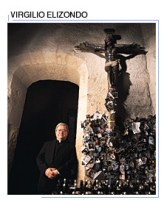
Edgardo goes on to say, “The church needs leaders who have eyes to see that all ethnic ministries are provisional because the future is mestizo.” To repeat the key claim, “this mixed heritage is not simply a historical or ethnic marker; it is also the goal of Christian existence.”
As I told the CCDA workshop, I am not advocating being blind to or forgetful of the history of oppression and how this trajectory deforms community, institutional, and church life. A notion of cheap “reconciliation without memory” leads to assimilation into the dominant culture and its values. This is exactly why New Creation matters: we are freed from captivity through shared journeys and communities of conversion which make difference meaningful in an exchange of gifts and a vision of mutuality which is both truthful about the grip of sin and reaches toward a new place of life together.
Through the ministry of Maggy Barankitse in the east African country of Burundi, orphans of violence between rival Tutsi and Hutu groups have lived for years together at Maison Shalom (“House of Peace”). On top of former tribal killing fields, they share intimate daily life with the multiplicity of people who come there including from the “Twa” minority, nearby Congo, and “Muzungus” (outsiders) from Europe and the U.S. Over time, their identities become reshaped and quite confused in this new community. When questioned about her ethnic identity, one orphan speaks of herself as being a “Hutsi-Twa-Congo-Zungu”—pulling all these peoples into a kind of one new humanity.
Integration and diversity do not state the power of the Holy Spirit’s interruption of history deeply enough. To emphasize Edgardo’s point, “all ethnic ministries are provisional because the future is mestizo.” Diversity and Integration lack a telos, a goal, a “for what purpose?” New Creation and a mestizo vision properly understood within God’s work of “reconciling all things in Christ” (Colossians 1:15-23) offer a fresh paradigm of “toward what” that is not only deeply transformative but beautiful, a bit scary, and subversive to the way things are. Not to mention a deeper way to holiness and vision which requires God.
About the Author: Chris Rice is co-director of the Center for Reconciliation at Duke Divinity School. He is author of Reconciling All Things, Grace Matters, and More Than Equals. His writes regularly at the blog Reconcilers with Chris Rice.
Related Posts: Integration and Diversity are Insufficient
Also See:
- Story about Virgil Elizondo in TIME Magazine 100 Innovators: If Jesus Had Been Born in San Antonio
- A World of Difference: For Colón-Emeric, reading Obras de Wesley was a turning point Duke Divinity Magazine, Spring 2007
- For a powerful theological account of a vision of reconciliation as new creation see Leslie Newbin’s The Quest for Unity Through Religion in Leslie Newbigin: A Reader
Last Five Posts by Chris Rice:
 Chris Rice
Leave a reply to Ed G. Cancel reply