

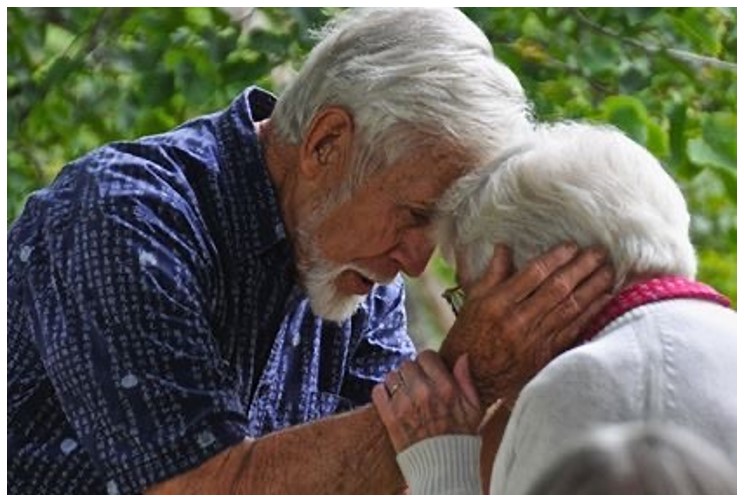

My father passed away December 4, 2020. Last week family and friends were finally able to gather in Vermont for his memorial service and burial of his ashes. The occasion inspired me to offer this meditation on his 60 years of ministry.
After my father passed away last December, we had a good laugh when we found a document buried away which Dad never mentioned: his grades from Middlebury College, where he majored in business. Dad always said he didn’t do very well. Well, let’s just say his grades were irrefutable proof.
But another document was prominently filed: the award my father received from Pittsburgh Theological Seminary, for receiving the highest grades in his graduating class.
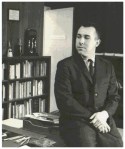
When Dad stepped out of economics into courses on the Bible, preaching, theology, and mission, he was like a Labrador Retriever who just discovered the joy of chasing a ball. Sixty years later, he was still chasing. He found his calling and never turned back – ordained Minister of Word and Sacrament. From churches in Ohio and Connecticut, to 16 years as a missionary in South Korea, to hospital chaplain and drug and alcohol recovery counselor in Oklahoma, to pastoring in Vermont, Dad defined the vocation of “minister” through his gentle powers of language, integrity, and relationship.
Dad came alive in front of a congregation. Three years ago, the Christmas after my mother passed away, we were at his house in Vermont. I got a message from a church deacon that they had asked Dad to offer a prayer during the Christmas service. He told them he was reluctant. I asked Dad if he would do it. “I don’t know, I don’t know,” he said, with some agitation. I think he was too sad – first Christmas without his beloved Sue.
We got to church, sat in the pew. When the time came for the prayer I looked over at Dad.
He rose. Strode down the aisle. Stood in front of the congregation. Paused. Looked into their eyes. Then, in a commanding voice, he spoke: “Silent! Silent Night!” Just that, and he had us all in the palm of his hand. He prayed an elegant prayer, finished, walked back to the pew, sat down. Then he turned our way and, with a smile, he whispered, “I pulled that out of my back pocket.”

With the mechanical, Dad was all thumbs. But with language he was a poet, a master of metaphor and story whose words lifted people into the miracle of the ordinary. Whether the Korean students who gathered in his upstairs study at our home in Seoul countless evenings – twenty pairs of shoes at the front door – or in a church sanctuary: in front of an audience in search of meaning, Dad was transformed. Was transformative. With the words was his spirit – humor, hope, warmth, not as spiritual master but as friend. He ushered people into a living encounter with mercy, grace, transcendence.
When the pandemic erupted early last year, I flew to Vermont to help Dad. Little did I know I would be living with him for four months, apart from my wife Donna in New York City. It wasn’t always easy. But it was the greatest gift I could have received, including seeing how behind the public minister who touched so many was the hidden man, wrestling with God.
During those months we children came to see it was best for Dad to move to a nearby retirement community. Problem was, Dad didn’t want to move, and he staged many protests. One day I saw him in his bedroom, sitting at the shabby folding table which was his preferred desk. He had a bible in his lap, and I asked what he was doing. “I am wrestling with God,” he said quietly. The next day he asked me to arrange a call with us, his four children, to discuss the move. I could feel his anxiety mounting. As we started the Zoom call that night, I braced myself for a final protest.
But as Dad began to speak, he morphed, as if he was not in front of a computer screen but a congregation, delivering a sermon with three points, anecdotes about a ropes course and the stars aligning, his readiness to move and take the leap of faith. After the call, I closed the computer in wonder. “Wow, Dad. You surprised me,” I said. Dad laughed and said, “I roooose to the occasion.”
After he died, I found the notes Dad was writing at his table that anxious day before the call. They were about the two disciples walking the road to Emmaus at the end of the gospel of Luke (24:13-25). Jesus has died. They are downcast. They don’t know Jesus is risen from the dead. Yet suddenly Jesus overtakes them on the road. Here’s what Dad wrote as he wrestled in private:
“Broken hopes. As they approach the village, Jesus came up behind them. It is nearly evening – the day is almost over. Their eyes were opened … The mood captures me, because I need to know the comfort and encouragement of His presence… In our time of need, in our darkest moments, when we stumble and cannot find the way, He is there. He is coming. For now we cannot see him. But he is coming. Draw near to God and God will draw near to you.”
We live in a time where the private self often contradicts the public Facebook self. But my father’s public hope emerged from the crucible of the honesty, joy, and drama of his intimacy with God. The definition of integrity is “the state of being whole and undivided.” Through my father, the stories of the Bible came alive for others because they were living in him. Dad’s impact in this world was deep because his integrity was deep.
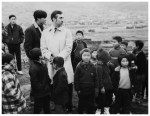
His impact was also deep because he went deep with people. In South Korea, Dad and Mom were not Poisonwood Bible missionaries. When people talk about “decolonizing mission” – my parents were pioneers in that.
Of his first days in Korea, in 1966, Dad wrote, “Could I ever penetrate beyond the front doors of those shops? Would I ever be at home inside, how deep would I go?” It was four years before our family went on home leave to the U.S. That summer before my father left Korea, a student told him that his ministry was a failure. And a wise grandfather told him, “We’ve been watching you. If you return, maybe we will listen to you.”
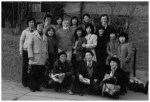
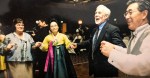
He did return. And the next 12 years, he went deep. He went deep because he lived among them. Learned their language. Listened to them. Saw them, and loved them. The university students with their spiritual hunger, for whom Dad was a before-and-after presence who changed their lives forever. The pastors in jail, persecuted for resisting the political dictatorship. The man who came to our door over and over, asking for money. Dad never turned him away. The Korean CIA agents who followed him and interrogated him – even them he treated as human beings. And because he went deep, he saw deeply, seeing there could be no choice between the Jesus of salvation and the Jesus who liberates the oppressed. And you can’t think of Dad in any of this apart from Mom – he went deep because their mutuality was deep. He saw Mom and honored her as more than equal, as superior in her own uniqueness and unique ministry as social worker, as friend to outcast unwed mothers and their children. And both Dad and Mom welcomed how the Korean people changed them, made them more human, more Christian.
Even in his final years in Vermont – whether local fitness center, general store, restaurant, or retirement community where his life ended – to the end, wherever he went, my father saw all and engaged all. He saw people. He saw you.
When I was living with Dad last year, one day we took a long drive around his mountain town. He guided me across roads and hills I had never seen. So many houses had a memory of a pastoral visit. “I went there once,” he said with a smile, as if remembering celebration and breakthrough. “I went there too,” he said with a grimace, as if remembering crisis. And because he went to them, they came to him. At his little pastor’s office next to the general store, many, many people who would not dare enter a church found a door open to all, sitting down to Randy’s warm presence and power.
Dad loved to tell the story of one of his seminary classmates, an African-American student who had a huge influence on him and went on to be a leader in the civil rights movement. In class one day a professor finished his lecture and asked if there were any questions. Dad’s classmate raised his hand and said, “Professor, could you put those cookies on a lower shelf?”
My father removed the obstacles between people and God. He put grace on a lower shelf, available to all. In the Greek, gospel means “good news.” No matter who you were, Dad brought good news. He was good news. And all the people who crossed his path were good news to him. He truly was a Minister of the Gospel.
Note: The story of my parents’ work for justice in South Korea is told in the book they co-authored with others, More Than Witnesses: How a Small Group of Missionaries Aided Korea’s Democratic Revolution, and in Faithful Friendships: Embracing Diversity in Christian Community by Dana Robert.
 Chris Rice
Leave a comment