

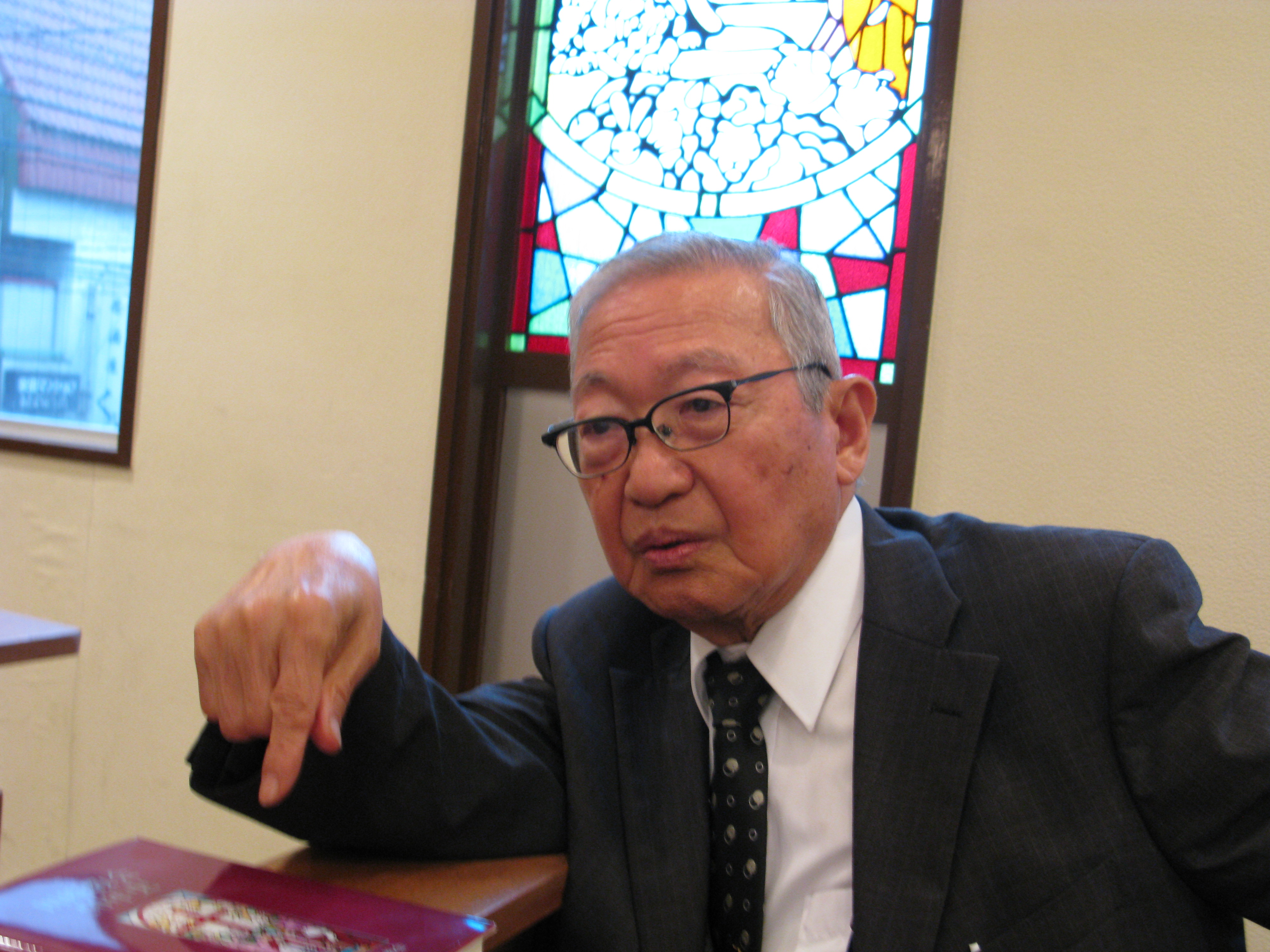
In 2012 I met a pioneer in Japanese-Korean reconciliation, pastor and theologian Rev. Sekita Hiroo. Yoko Sato, a Japanese friend and composer, recently sat in on a remarkable sermon and lecture by Rev. Sekita, and reports the following nuggets:
The title of his sermon was “In the beginning was reconciliation” (2 Cor. 5:16-21) derived from John 1:1 “In the beginning was the Word.” He quoted Genesis 3:21 “And the Lord God made garments of skins for the man and his wife, and clothed them.”
He said, “The story of Adam and Eve describes the essential nature of the human being. God did not blame them who were trying to hide their shame with the leaves. God forgave their sins and provided them “garments of skins,” so that they can live wearing the garments. Since then, human has lived wrapped in God’s mercy. This action of reconciliation was initiated by God at the very beginning of human’s history.”
Pastor Sekita also commented on Matthew 22:34-40: “If you do not love your neighbors, it does not mean that one loves God. In order to love both God and your neighbors, you need to bring your body. By bringing your body, you will able to accumulate the facts [of love] little by little. Jesus brought his body to the cross, which is the fact of God’s love.”
After the worship service, he spoke about his reconciliation ministry in [a Japanese community where Korean immigrants lived at the margins]. Pastor Sekita emphasized the importance of placing yourself in the minority. “If you place yourself in the majority, you would not be able to listen to their cries. Reconciliation will be realized when we step into a common burden by sharing pains.”
Chris Rice is director of the Duke Divinity School Center for Reconciliation and works in the field of peace, justice, reconciliation, and Christian life and mission. His books are Reconciling All Things, Grace Matters, and More Than Equals. He blogs at Reconcilers.
 Chris Rice
Leave a comment